
Hydraulic presses are used in metal fabrication and assembly to do jobs such as seating bearings, shaping brackets, and drawing sheet metal into sink bowls. This guide explains the main press types, compares common frame designs, and helps you choose a frame and configuration for your work.
What Are the Main Types of Hydraulic Presses?
Equipment catalogs often group hydraulic presses by the work they do. For a repair station, look for shop presses. Production machines are usually named for the work your part requires, such as forming, punching, deep drawing, or compression molding.
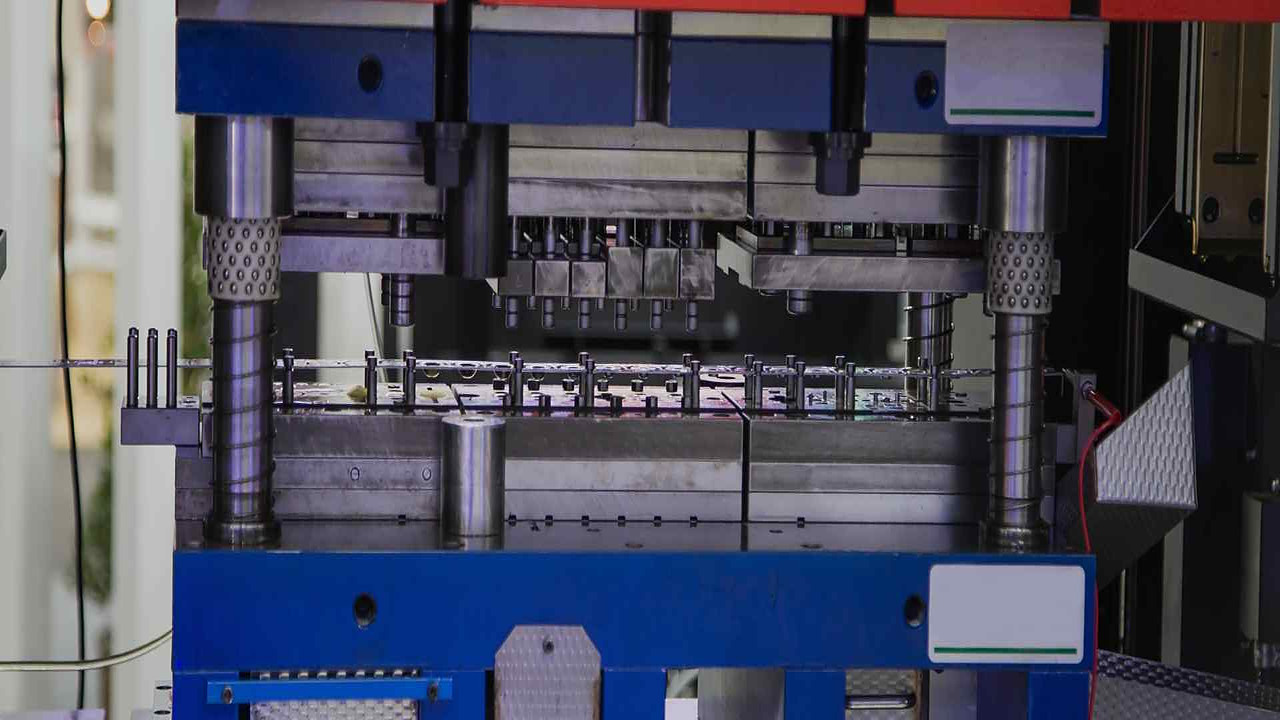
Hydraulic Shop Presses
A hydraulic shop press handles jobs such as installing bearings, removing bushings, and straightening bent parts. If you’re pressing a bearing into a housing, the bed supports the housing while the ram seats the bearing. A shop press is a useful starting point if your station handles several repair or assembly jobs.
Hydraulic Sheet Metal Forming Presses
Start with a forming press when you need to give sheet metal a repeatable shape. The ram closes a die that presses the blank into the required profile, such as the offset or raised rib in your mounting bracket.
Hydraulic Sheet Metal Punching Presses
Choose a sheet metal punching machine if your part only needs holes or cutouts. The punch shears material against an opening in the die. If your bracket is already formed, choose tooling that can reach the hole locations without interference.
Hydraulic Deep Drawing Presses
Start with a deep drawing press if your part needs a base and deep sidewalls formed from one sheet. For a sink bowl, the punch drives the sheet into a die cavity while material around the edge flows inward to form the walls.
Hydraulic Compression Molding Presses
Choose a compression molding press if your part is made from a measured charge of rubber or similar moldable material that must fill a closed cavity under pressure. For a rubber seal, the cavity defines the ring shape. When the compound requires heat to cure, heated platens warm the mold and the press keeps it closed during curing.
You’ll also see vertical and horizontal in equipment catalogs. These terms describe the direction of the pressing stroke. On a drawing press, single-action and double-action describe its motions. A double-action press can hold the sheet and drive the punch separately. The same machine can therefore be a vertical, double-action deep drawing press.
How Do Common Hydraulic Press Frame Designs Compare?
Common hydraulic press frames include C-frame, H-frame, four-post, and straight-side designs. The position of the frame supports affects how you load parts and dies, while the frame and slide guides affect how the tooling stays aligned under load.
Common Frame Designs
C-Frame Hydraulic Presses
Viewed from the side, a hydraulic C-frame press looks like the letter C. Its upper and lower sections are joined at the back, leaving the front and both sides open. The ram moves down toward the worktable to press the part held in a die or fixture. You can feed long parts from the side and reach the tooling from the front.
H-Frame Hydraulic Presses
On a typical H-frame shop press, two uprights support the top crossbeam, and the work bed sits between them. The ram comes down from the crossbeam to press against the part. With an adjustable bed, you can bring a short bearing housing closer to the ram or lower the bed to make room for a taller assembly.
Four-Post Hydraulic Presses
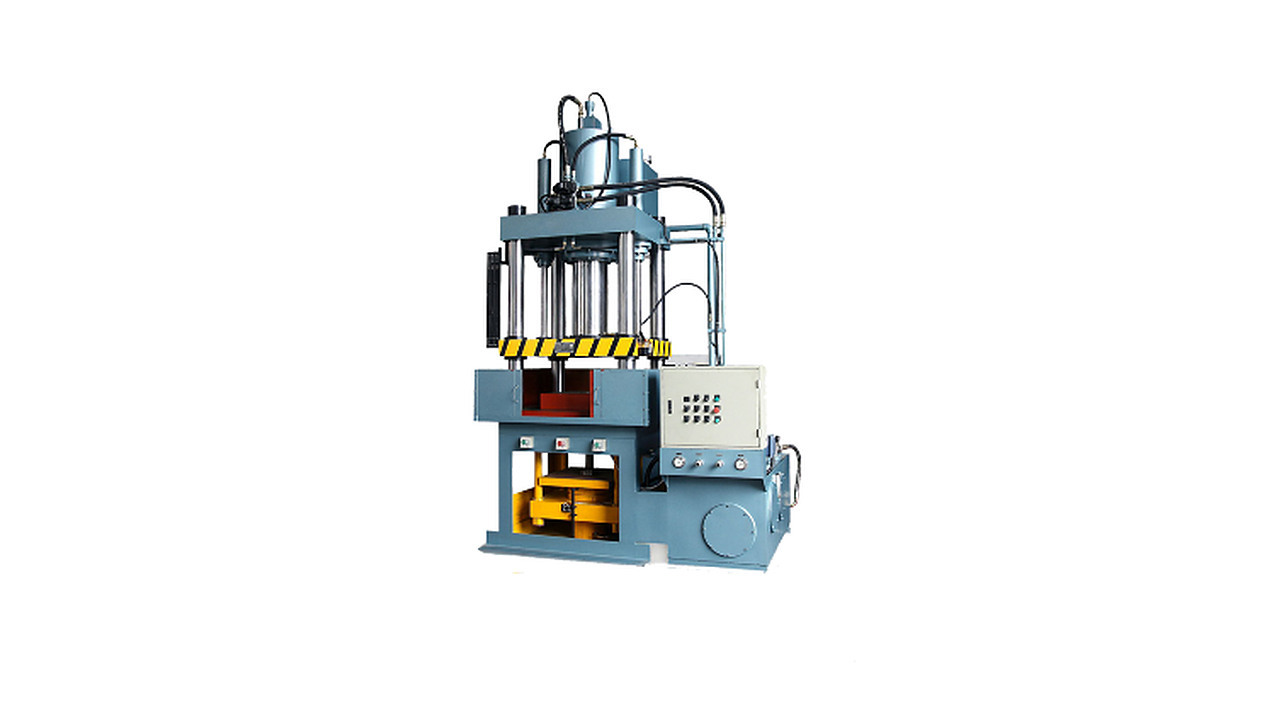
A four-post press has a column at each corner of the work area. In a typical design, the moving platen travels along the columns as it brings the upper die down toward the lower die. If your blanks enter from the front and your formed parts leave from the side, the gaps between the posts can give you separate paths for loading and unloading.
Straight-Side Hydraulic Presses
A straight-side press has a structural housing on each side of the work area. Many models have slide guides in the side housings that help the upper die meet the lower die squarely. If your line feeds sheet stock from the side, a model with a suitable side window lets the stock enter while leaving the front available for tooling access.
Practical Differences Between Frame Designs
| Frame design | Part loading | Space for die changes | Tool alignment under load |
|---|---|---|---|
| C-frame | Open at the front and both sides. | Side access is available, with depth limited by the rear of the frame. | The open frame can deflect under load and affect die alignment. |
| H-frame shop press | The clear width between the uprights limits what can enter. | The space between the uprights and the bed height determine what fits. | The ram must line up with the point you need to press. A wider opening does not increase the allowable off-center load by itself. |
| Four-post | Direction of entry depends on the gaps between the posts. | A die can fit on the bed but still be too wide for the opening along its loading route. | The posts commonly guide the platen. Performance under off-center loads depends on the model. |
| Straight-side | Front access is typical. Side feeding requires a suitable window. | Large dies typically enter from the front unless a side opening provides enough clearance. | Side housings and slide guides help maintain alignment as the die closes. |
Part loading and die changes. Two presses can have the same bed width and give you different ways to change a die. A C-frame press may let you slide your die onto the bed from the side. On a four-post press, that same die can fit on the bed but be too wide to pass between the posts from the direction you need to load it.
Off-center loads and tool alignment. If most of the forming happens on one side of your die, the force tends to tilt the moving slide. A straight-side press uses its side housings and guides to help resist that movement. A four-post press guides the platen along its columns, and some models add a leveling system.
This is why two presses with the same rated force can behave differently on your die.
Which Hydraulic Press Frame Should You Choose?
Start with the frames that give your part and die a practical route into the machine. Before comparing loads, rule out any press whose slide cannot reach the working position with your die and fixture installed. Then narrow the list by where the pressing force acts.
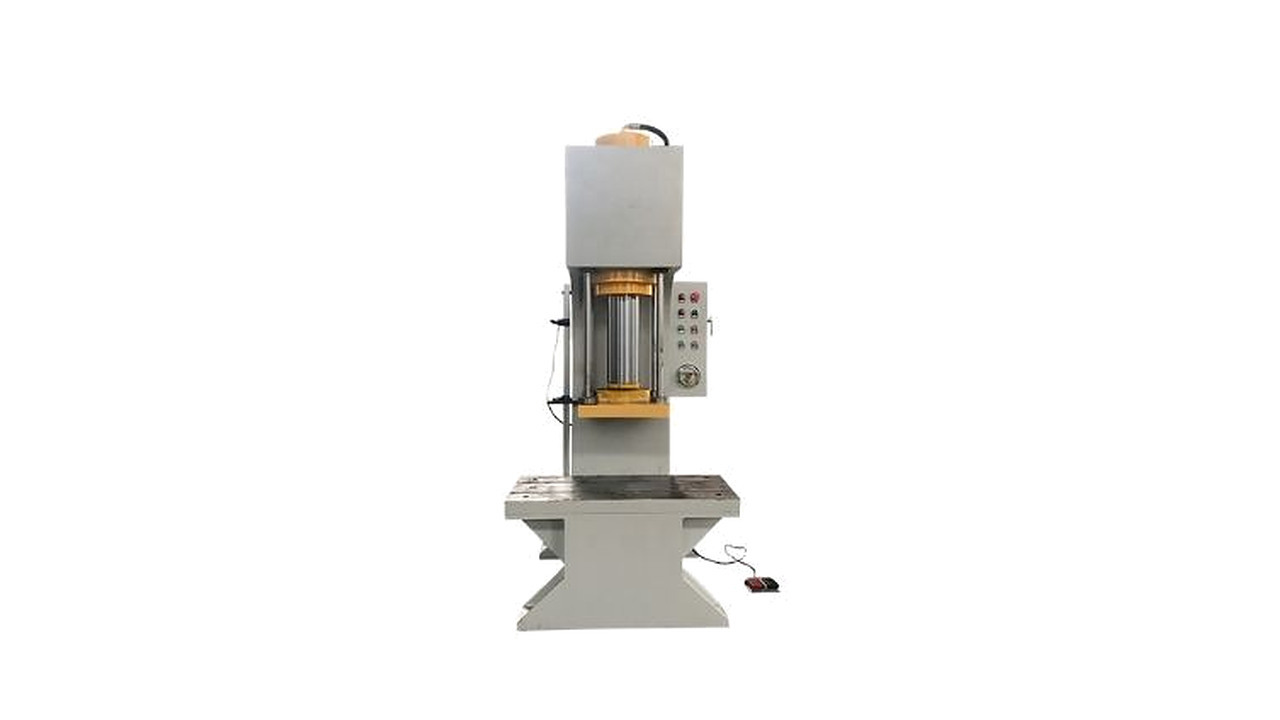
- Start with a C-frame if you regularly feed long parts from the side or need access from several directions. If a large section of the part extends behind the pressing point, the rear of the frame can get in the way.
- Look at an H-frame shop press if one station handles press fits, removal jobs, or straightening for parts of different heights. For a station like this, prioritize enough clear width for your widest fixture and enough bed adjustment for the range of parts you handle.
- Compare four-post presses if your die needs a broad working surface and has a clear route through the posts. If the press is going into a line, picture the die change with the feeder, guarding, and other equipment already in place.
- Compare straight-side presses if your process uses a large die that needs to stay closely aligned as the press closes, especially when the load repeatedly acts to one side. For a repeated off-center load, compare the model’s allowable force at your load position before choosing. If your stock feeds from the side, the window also needs to clear your feed path.
How Do You Choose a Hydraulic Press Configuration?
Once you’ve shortlisted a frame, choose the options your part and tooling need.
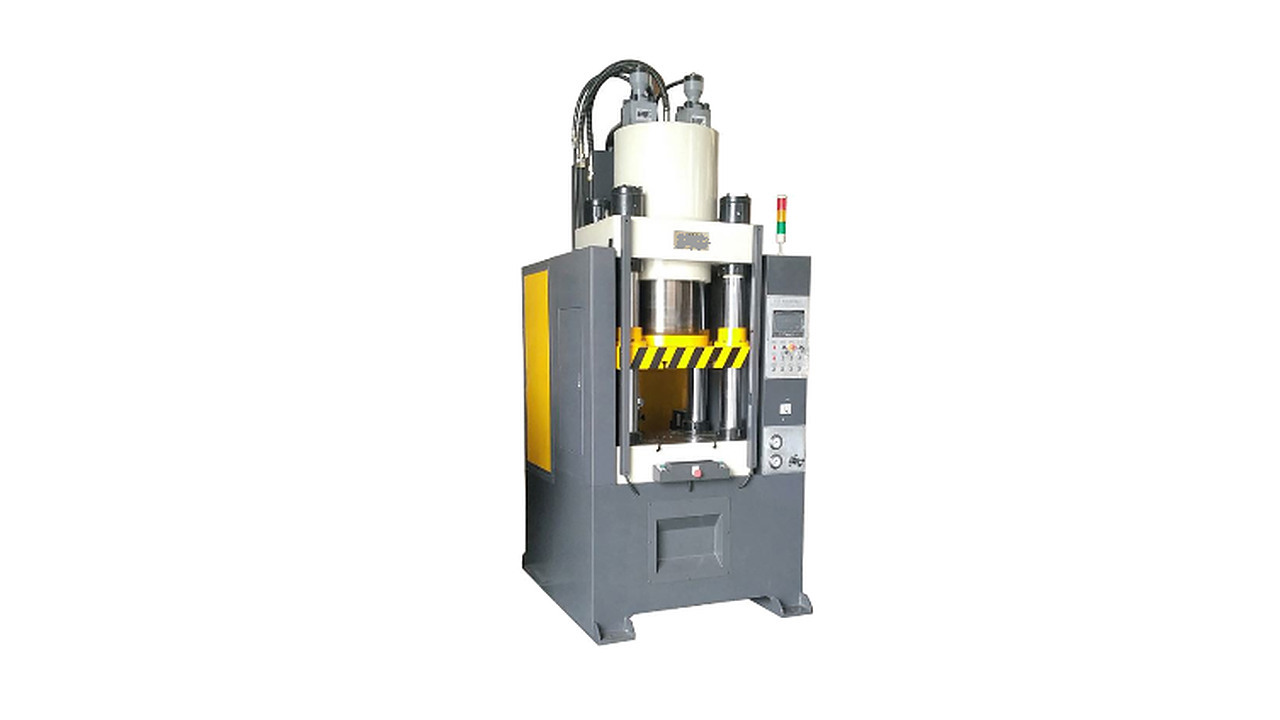
- Vertical or horizontal pressing. Start with a vertical press if your part sits flat on the die and the force needs to come from above. If you’re pressing a bushing into the end of a long assembly that is easier to support horizontally, compare a horizontal press. The assembly can stay on its supports while the ram presses into the end.
- Single-action pressing and blank holding. If your tooling needs just one driven pressing motion, start with a single-action press. For deep drawing, the way your die holds the sheet determines the setup. A die that needs an independently driven upper blank holder calls for a double-action press. If your die is designed to receive blank-holding force from below, compare presses with a compatible bed cushion and check how it controls force through the draw.
- Holding force and mold heating. If your process needs the mold to stay closed under load, specify the holding force and how long the press must maintain it. If your material also needs heat to cure, as with some rubber compounds, ask for heated platens and temperature control that can maintain the mold temperature your process requires.
FAQ
Is an H-Frame Hydraulic Press the Same as a Four-Post Press?
The names sometimes overlap. An H-frame shop press often has two side uprights and a bed between them, while some manufacturers use H-frame for a portal press with four columns. You’ll also see the H-frame label on production equipment such as H-frame hydraulic hot presses. Use the front and side views to count the supports and identify the opening your tooling will pass through.
Can Two Hydraulic Presses With the Same Tonnage Handle Different Off-Center Loads?
Yes. If your die applies force 100 mm to the left of the slide centerline, ask how much force each model allows at that position. Include any front-to-back offset as well. That gives you a comparison for the load the press will actually see.
Can a Hydraulic Press Deliver Its Rated Force Throughout the Stroke?
Some models are rated to deliver full force throughout the stroke. If your job needs a given force over a particular part of the stroke, ask what force the press can deliver in that range and at what working speed. The slide may approach your part faster than it moves while applying force.
Can You Reuse an Existing Die on a Different Press Frame?
Yes, if the mounting interfaces and working dimensions match and the new press supports the die’s required functions. Check the mounting surfaces, slots or bolt pattern, and the die’s closed height. If your die uses an ejector or cushion, check whether the new press can operate that feature with the existing tool.
What Should You Include in an RFQ to Compare Hydraulic Press Quotes?
Give each supplier the same part drawing, die and fixture dimensions, loading direction, and pressing requirements. Include the force and where it acts if you know them. Ask each supplier to return a layout drawing and specify the usable opening, working stroke, and included options. That way, you can compare what each quote actually covers.
Final Thoughts
The best starting point is your part and the operation it needs. Pick a press type that can do the job, then check whether the frame gives your part and die a clear route in and out. From there, match the pressing direction and any holding or heating features to your process.
If you’re comparing machines for a specific part or die, you can contact KDM to discuss your job.